Key Features
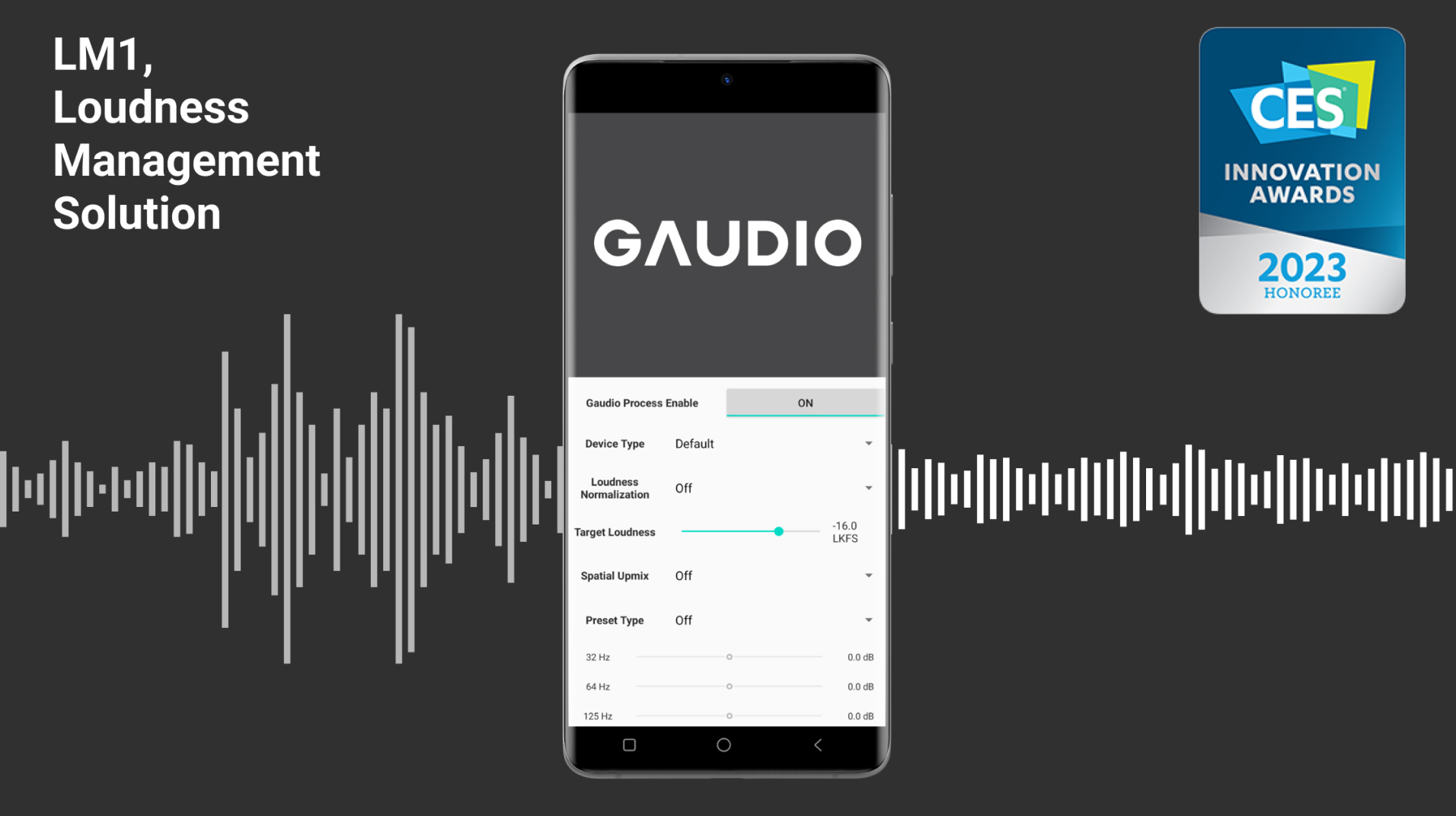
LM1,
the only internationally standardized side-chain metadata technology for loudness management
-

ANSI/CTA-2075.1, Loudness Standard for Over-the-Top
Television and Online Video Distribution for Mobile and
Fixed Devices - LM1ANSI/CTA-2075.1, Loudness Standard for Over-the-Top
Television and Online Video Distribution for Mobile and
Fixed Devices - LM1 -

CES Innovation Award
2023 Honoree for Streaming -

Metadata for loudness operation on
streaming services (TTA.KO-07.0146)Metadata for loudness operation on
streaming services (TTA.KO-07.0146)
Our product lineup is designed to meet diverse needs and deployment environments.
Our product lineup is designed to meet diverse needs and deployment environments.
-
LM1 Server-Tools
Analyzes the loudness of various incoming content
on the server side using the ITU-R BS.1770 standards
(up to BS.1770-5). Automatically adjusts each file
to meet the target loudness regulations/requirements
of different countries and platforms.
With a single server-side process,
all distributed content can be loudness-normalized
— without requiring any client-side processing. -
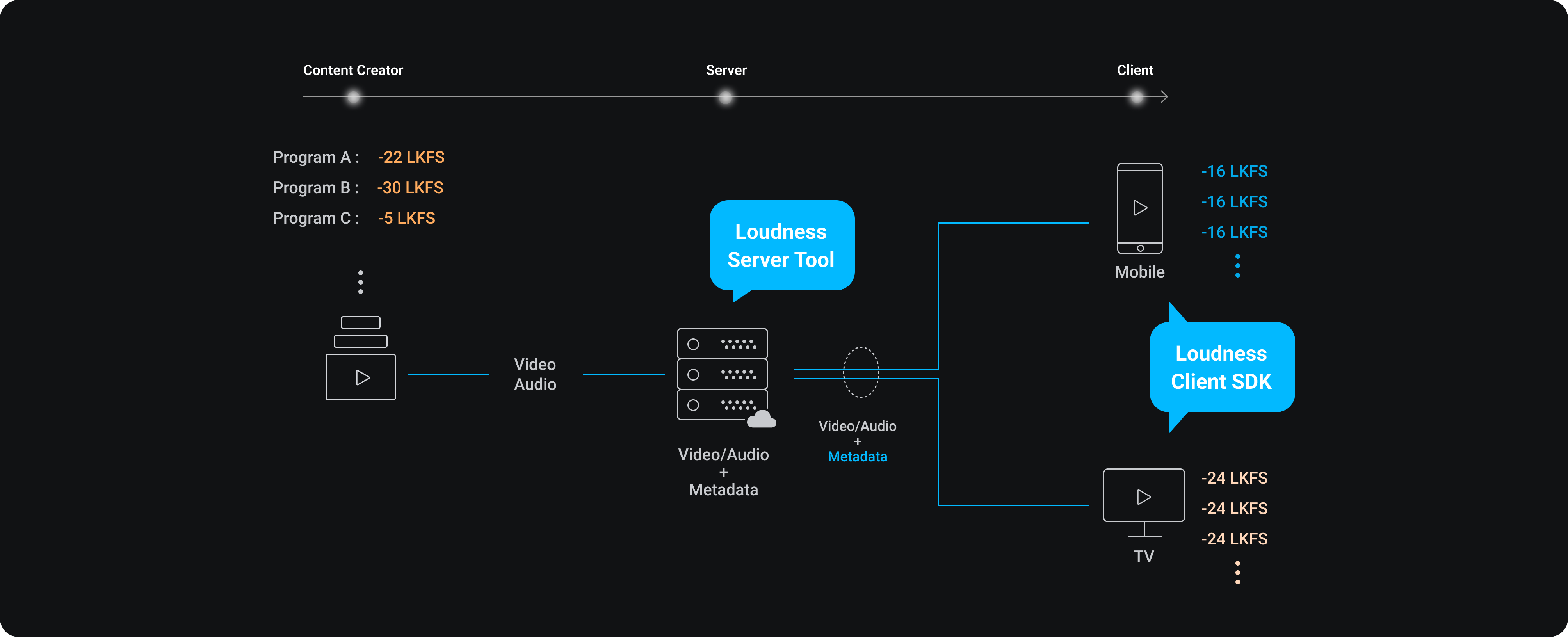
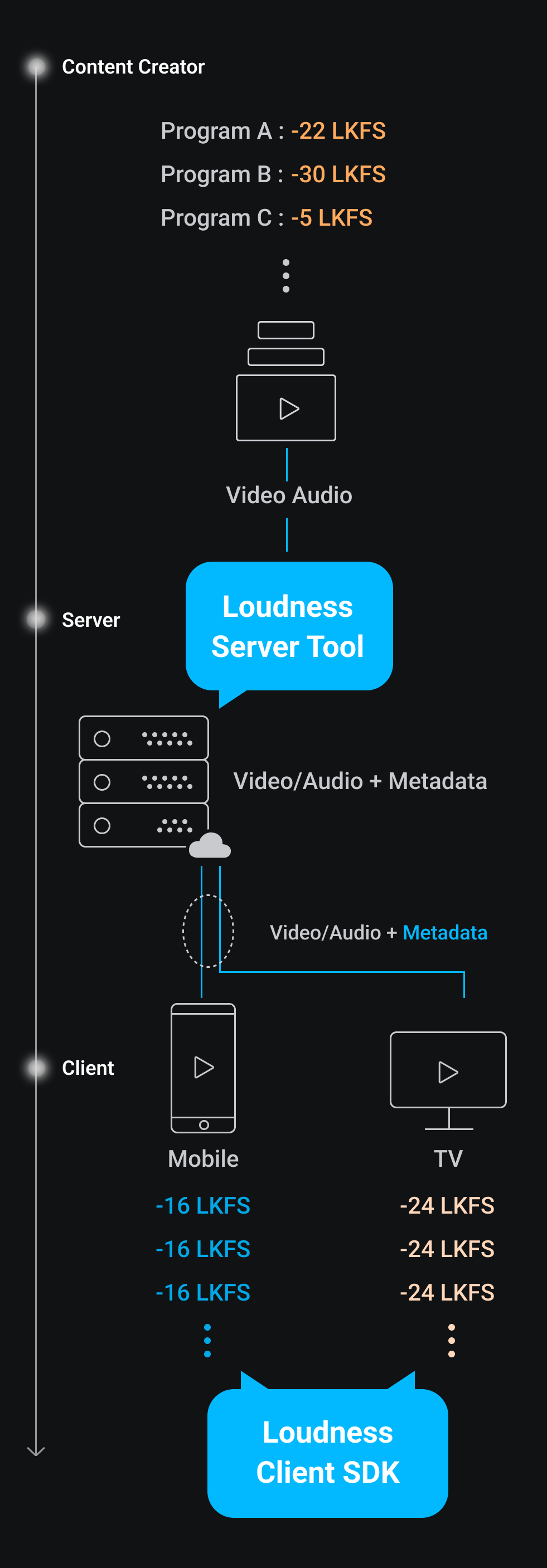
LM1 Server-Client
The server measures the loudness of content,
generates LM1 metadata, and transmits it
to the client via a side-chain path.
The client then performs real-time loudness normalization
according to the playback environment
and device-specific target loudness.
This architecture enables seamless integration
with ANSI/CTA-2075-compliant devices. -
LM1 Stand-alone
A real-time loudness normalization technology
designed for environments where metadata generation is difficult
— such as live streaming — or for devices
that must manage multiple audio sources locally,
such as smartphones, TVs, and in-car audio systems.
Delivers superior audio quality compared to
conventional DRC-based normalization, providing consistent
and transparent sound across all playback situations.
Related Content
Learn more about Gaudio Lab's solutions!
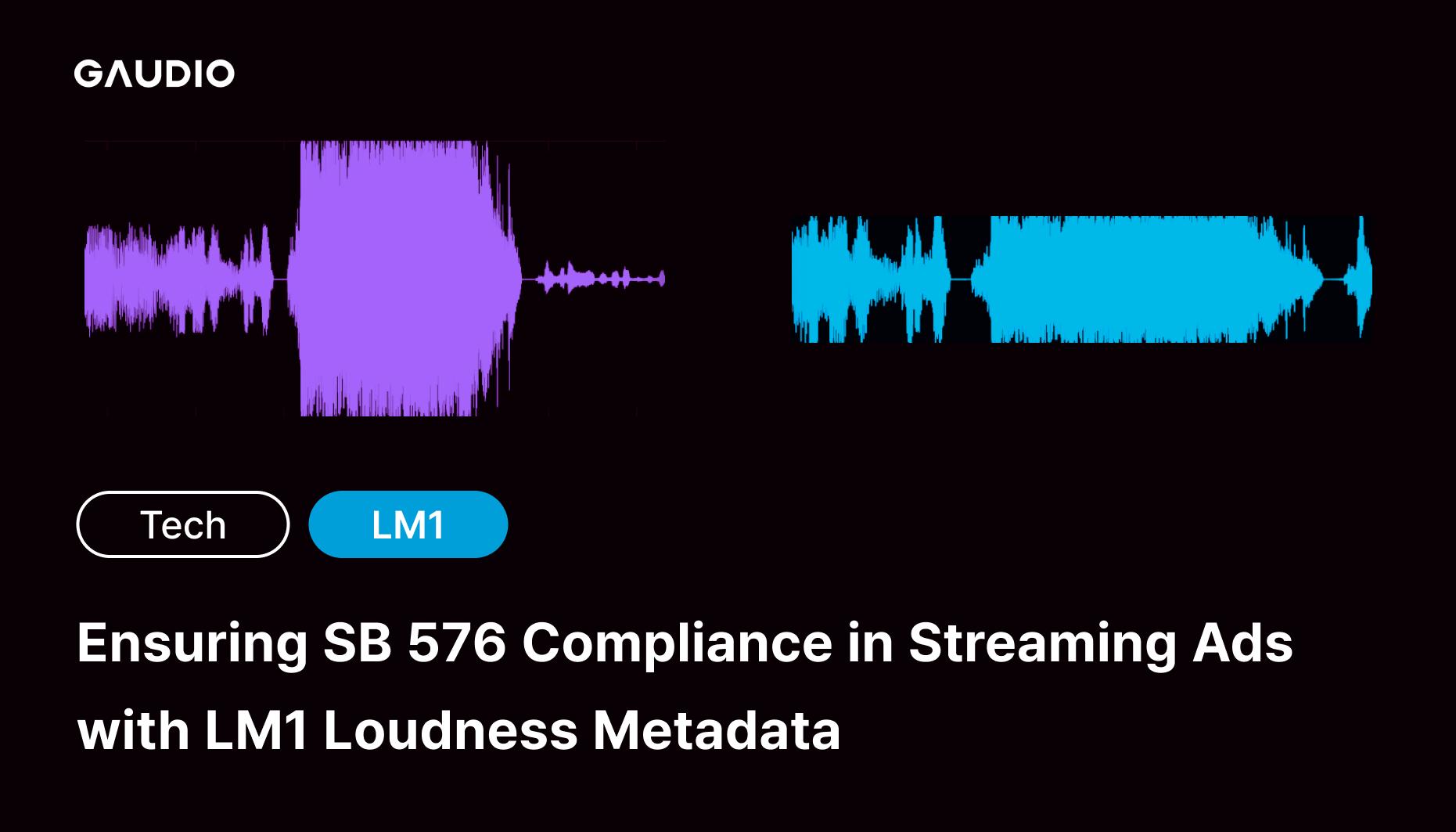
Ensuring SB 576 Compliance in Streaming Ads with LM1 Loudness Metadata
2025.11.04
California Just Got Quieter — And That’s a Good Thing (Complies with SB576)
2025.10.28

How can broadcasters localize content faster?
2025.08.28

From LKFS to true peak, the complete guide to Loudness
2025.07.18
FAQ
Frequently Asked Questions about Gaudio Lab’s Solutions
Which codec should I use?
LM1 can be used with any audio codec because it is an audio codec-independent metadata. For example, it can be used with MP3, AAC, FLAC, etc. that do not have separate loudness metadata.
How is meta-data delivered?
The LM1 standard is designed to be an audio codec-agnostic form of extrinsic metadata that can be used in combination with a variety of audio codecs.
As such, it can be delivered in a number of ways, depending on the streaming service's approach.
It can be embedded in a container within the streaming content, or it can be passed as a base64 encoded string along with other metadata embedded in the content.
Can I use LM1 on live streaming services?
It is challenging to extract metadata in real-time with the LM1 in live broadcasting scenarios.
In the LN SDK, there is a mode (LCO) that can handle loudness normalization without metadata, which is usually sufficient. However, there are some limitations in hitting the exact target loudness.
Does LM1 require action in both server and client?
The server is only responsible for extracting and transmitting the LM1 metadata. Once the LM1 metadata is extracted for each sound source, no further processing for loudness leveling is required on the server.
When playing the sound source, the client receives the LM1 metadata and uses it to process the loudness level in real-time.
Does LM1 solution include DRC?
The LM1 decoder includes a built-in DRC function, which enables comfortable loudness normalization with controlled dynamic range regardless of the listening environment, whether it's a noisy environment like a bus or subway, or when you need to listen quietly like in a quiet room.
What is ANSI/CTA-2075 standard?
This standard, established by the American National Standards Institute (ANSI) and the Consumer Technology Association (CTA), defines the loudness normalization method required when playing streaming media such as OTT and OVD so that it can be played at a normalized loudness across various devices and playback environments, enabling users to consume content without inconvenience.
It emphasizes the use of metadata for loudness normalization, and Gaudio Lab's LM1 metadata standard is also reflected in ANSI/CTA-2075.1, an extended standard of ANSI/CTA-2075.
What is the LM1 standard?
LM1 is a standard that specifies how the information required for the loudness normalization should be made into metadata and defined as a bitstream.
It was first established in 2020 as a standard specification of the Korea Telecommunications Technology Association (TTA) (TTAK.KO-07.0146) and was reflected in ANSI/CTA-2075.1 in 2022.
It is designed to solve the loudness problem of streaming media such as OTT, music, and podcasts, and the LM1 metadata specification enables easy loudness management on playback devices.
Our audio technologies support various devices and platforms.